
Our displays
Transitional fixtures
Spherical is the purest expression of Surround Reality. It is also the hardest configuration to scale — and a program that has to put thirty people inside the same surface does not need a sphere to get them there.
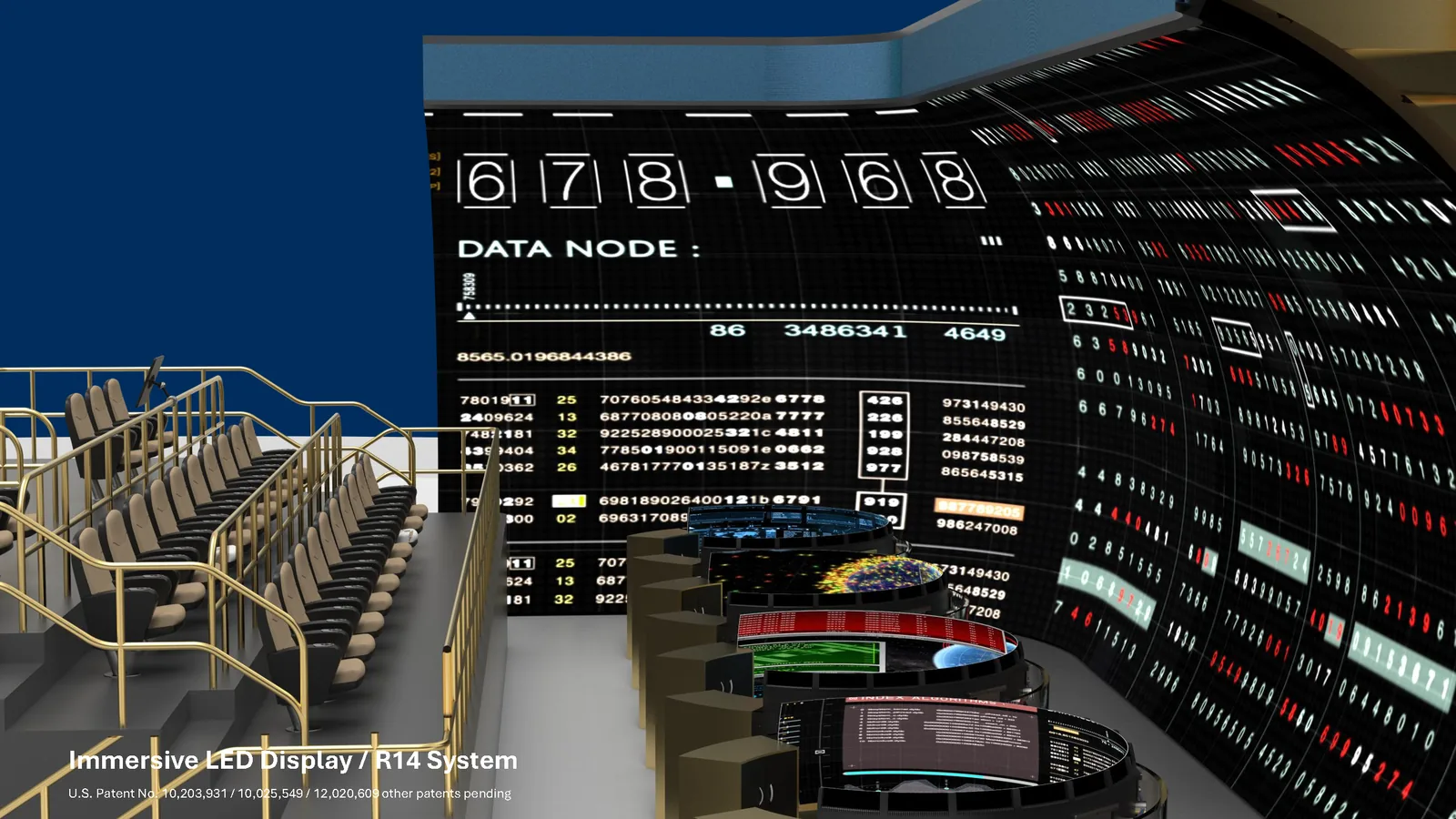
Transitional fixtures produce the same surrounding environment across a range of geometries — flat or cylindrical runs joined at the corners by compound-curved sections — so the display follows the walls that already exist in conjunction with the size of the user base. The surface stays seamless: no bezels, no blend zones, no facets at the joins.
Why this decides programs
The limit on a sphere is not that no building could ever hold one. It is that a sphere grows in every direction at once: put thirty people inside it immersively and the structure, the room and the program grow with it. That is daunting for reasons that have nothing to do with whether the display can be built.
A transitional fixture puts the same seamless surface along the geometry a facility can support, so the number of people it serves is a question of how far the run carries rather than how large a shell has to be. For command and control and the programs shaped like it, that is the difference between an immersive environment a building can accommodate and one it cannot.
Where it fits best
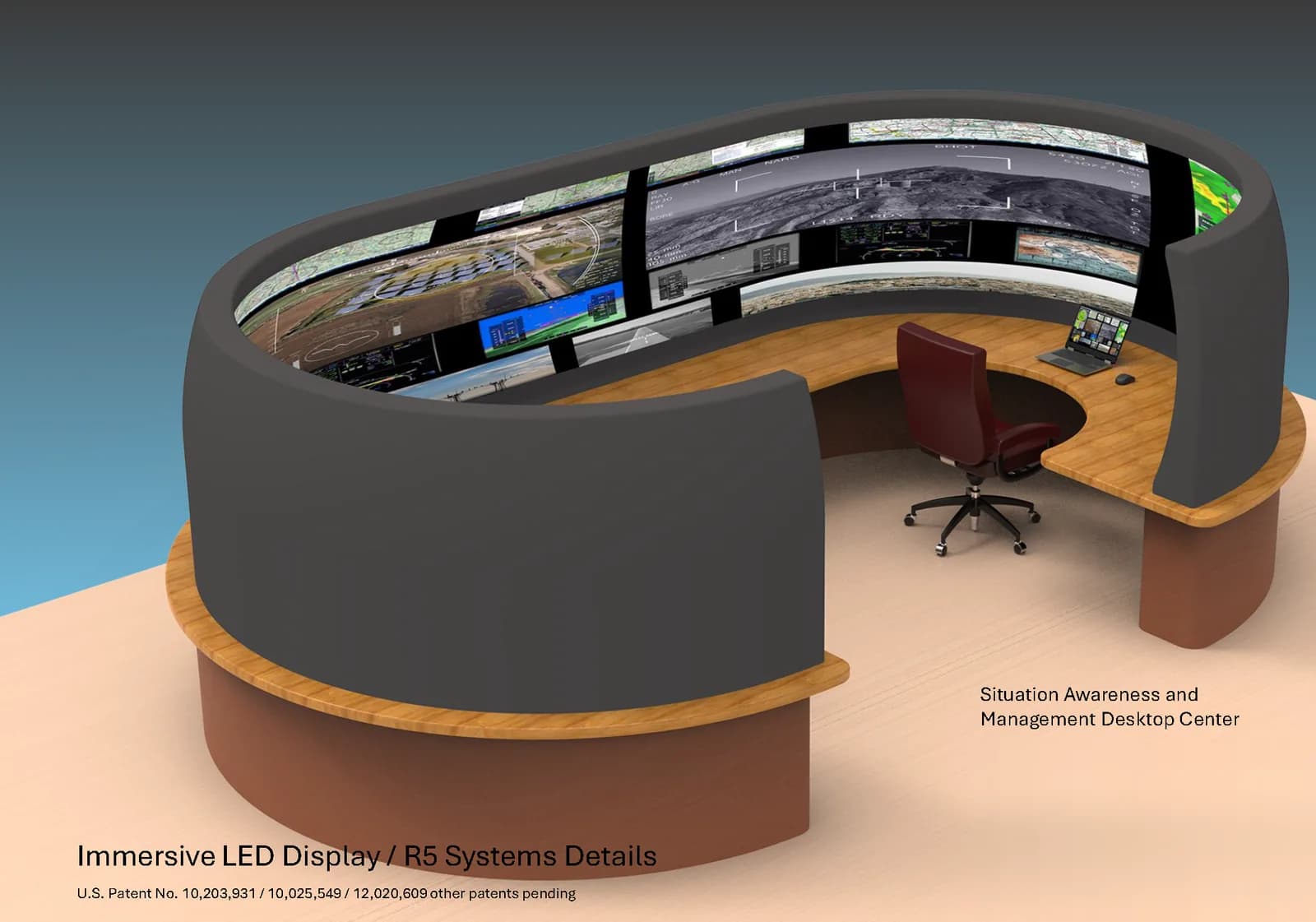
Watch floors and operations centers, most often. Those rooms are usually seated at consoles, already built, sized for a team rather than an operator, and showing a large arrangement of feeds rather than a surrounding world — which is exactly the case a transitional geometry serves without compromise.
Raise it early
Bring the room and the headcount into the first conversation rather than the third. How many people have to be inside the environment at once is what sets the geometry, and it tends to get asked after a requirement has already been written around a shape. Clear-span floor area is worth knowing at the same time, for the same reason.